

Energy Audit Services in Rajasthan
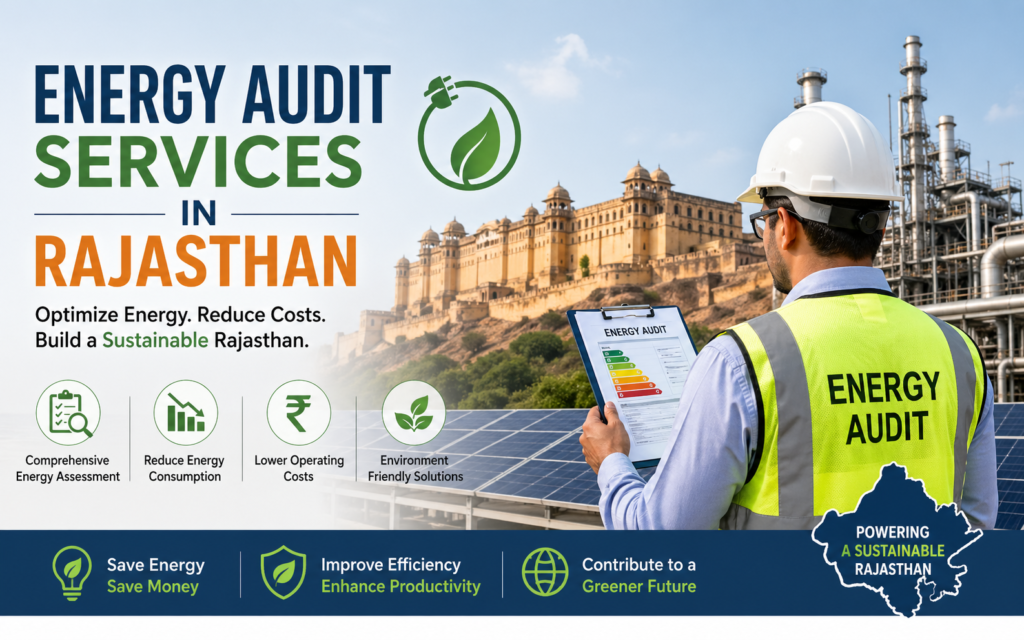
Rajasthan's Industrial Landscape: Mines, Cement, Textiles, and a Rising Energy Bill
Rajasthan is not typically the first state that comes to mind when one thinks of industrial energy consumption — but the numbers tell a different story. The state is home to one of India's largest concentrations of cement plants, particularly in the limestone-rich zones of Nagaur, Chittorgarh, and Sawai Madhopur. Its marble and granite quarrying and processing industry, centred in Kishangarh and Makrana, is energy-intensive by nature. Jaipur's growing commercial and hospitality sector, and the state's significant textile industry in Bhilwara and Barmer, round out a diverse and substantial energy consumption profile.
JVVNL, AVVNL, and JDVVNL — Rajasthan's three electricity distribution utilities — have seen consistent tariff increases over the past five years. For cement plants and other heavy industries, electricity is the second-largest cost input after raw materials. And across Rajasthan's commercial sector in Jaipur and Jodhpur, rising power costs are squeezing margins in hotels, retail, and hospitality — industries that benefit enormously from structured energy management.
Industrial energy audit services in Rajasthan are increasingly being recognised not as a compliance obligation but as a direct business advantage. Whether you're operating a cement kiln, a marble processing facility, a textile dyeing unit, or a Jaipur heritage hotel, understanding and optimising your energy consumption is one of the most reliable ways to improve bottom-line performance.
What Is an Energy Audit?
An energy audit is a professional, structured examination of energy flows across a facility — measuring what comes in, tracking how it's used, and identifying where it's lost or wasted. The outcome is a prioritised, implementable set of recommendations for reducing energy consumption and cost.
In India, energy auditing is governed by the Bureau of Energy Efficiency (BEE), which certifies qualified auditors and mandates audit frequencies for Designated Consumers under the Energy Conservation Act, 2001. A BEE-accredited energy auditor is the gold standard — their reports are credible, compliant, and carry the technical authority that banks, regulators, and boards require.
Why Energy Audits Are Particularly Relevant in Rajasthan
Rajasthan's cement industry is arguably the state's most energy-intensive sector. A single large cement plant may consume hundreds of millions of units of electricity annually, with additional substantial thermal energy input from coal and alternative fuels. Even marginal efficiency improvements — 1–2% on thermal efficiency, or better waste heat recovery — translate to crore-level annual savings at this scale. Detailed thermal energy audits and flue gas analysis are especially high-value services for cement and mining operations.
The marble and stone processing industry presents its own energy profile: high loads from cutting and polishing equipment, compressed air systems, and material handling. Compressed air leak detection in these facilities regularly uncovers 25–40% leakage rates — a substantial and recoverable cost.
For Jaipur's booming hospitality sector — which includes some of India's most iconic heritage palace hotels and a rapidly growing modern hotel inventory — HVAC management, hot water systems, kitchen equipment, and lighting represent the primary energy opportunities. Energy audit for the hospitality sector in Rajasthan is an area where we have specific and proven experience.
Types of Energy Audit Services We Offer
Electrical Energy Audit
Assessment of the entire electrical system — from incoming HT supply through distribution to individual equipment loads. Power quality, demand management, power factor, motor efficiency, and distribution losses are all evaluated. For cement plants and mining operations, where HT connections and captive generation are common, this work is particularly detailed.
Thermal Energy Audit and Flue Gas Analysis
For cement kilns, lime kilns, boilers, and industrial furnaces across Rajasthan's heavy industry sector, thermal audit work covering combustion efficiency, heat transfer performance, refractory integrity, and waste heat recovery potential is where the most significant savings are often found. Flue gas analysis provides the measured combustion data needed to optimise fuel-to-air ratios with precision.
Thermal Imaging Inspection
Infrared thermography of electrical infrastructure, refractory surfaces, and mechanical equipment. In Rajasthan's mining and cement operations, thermal imaging inspections of kilns and rotary equipment provide early warning of refractory failure — preventing costly unplanned shutdowns.
Compressed Air System Audit
Ultrasonic leak detection across compressed air networks in manufacturing and processing facilities. For marble and granite processing units in Rajasthan, this service consistently identifies significant recoverable compressed air losses.
Walk-Through and Detailed Audits
Scalable from preliminary assessments for commercial properties to full investment-grade audits for large industrial DCs requiring financial modelling of improvement measures.
Our Energy Audit Process
- Site Inspection: Comprehensive walk-through of the facility, documentation of all energy-consuming systems, and assessment of operational context.
- Data Collection: Utility bill review, equipment data, and real-time instrumentation on key systems to capture accurate consumption profiles.
- Energy Analysis: Data benchmarked against industry norms. Key inefficiencies identified and quantified with savings potential estimated.
- Audit Report with ROI Insights: Detailed written report with prioritised findings, savings estimates, investment requirements, and payback periods.
- Implementation Guidance: Post-report support for technical specification and vendor evaluation.
Industries We Serve in Rajasthan
Our energy audit work in Rajasthan spans cement manufacturers in Nagaur, Chittorgarh, and Sawai Madhopur — where thermal audit and flue gas analysis are primary services. We audit marble and granite processing units in Kishangarh and Makrana, textile and dyeing units in Bhilwara and Barmer, and mining operations across the state.
In Jaipur, our commercial energy audit work covers hotels, hospitals, educational institutions, retail complexes, and the growing IT and business services sector. Jodhpur's industrial and hospitality sectors also form a significant part of our Rajasthan client base.
Practical Benefits You Can Expect
Cement plants implementing energy audit recommendations — particularly around kiln thermal efficiency, waste heat recovery, and compressed air optimisation — have achieved annual savings of Rs. 1–5 crore at mid-size facilities. For commercial properties and hotels in Jaipur, energy cost reductions of 15–22% are common following implementation of audit findings. Marble and stone processing units benefit most from compressed air optimisation and motor efficiency improvements.
Energy Audit Compliance in India
Rajasthan's cement, mining, and textile industries include a significant number of BEE Designated Consumers subject to mandatory periodic energy audits. The PAT scheme requires these facilities to meet energy intensity targets. Non-compliance results in financial penalties. Our BEE-certified auditors produce compliant reports that satisfy all statutory requirements.
Cities We Serve in Rajasthan
The cost of an energy audit in Rajasthan varies by sector and scope. Walk-through audits for commercial properties start from Rs. 15,000–35,000. Detailed audits for mid-size industrial facilities range from Rs. 50,000 to Rs. 2,50,000. Large cement plants or mining operations requiring multi-day instrumented assessments may see costs in the Rs. 3,00,000–10,00,000 range. Savings identified routinely exceed the audit cost many times over in the first year.
Why Choose Us
Our team has direct experience with Rajasthan's most demanding audit environments — including hazardous zone assessments in mining, high-temperature kiln environments in cement, and heritage building constraints in Jaipur's hospitality sector. Our BEE-certified auditors bring sector-specific expertise, not generic methodologies.
Frequently Asked Questions
-
What energy audit services are available in Jaipur?In Jaipur, we offer electrical energy audits, thermal imaging inspections, compressed air leak detection, HVAC audits for commercial buildings and hotels, and detailed investment-grade audits for industrial facilities. We serve hotels, hospitals, retail, IT offices, and manufacturing units.
-
How can an energy audit benefit cement plants in Rajasthan?For cement plants, energy audits address kiln thermal efficiency, waste heat recovery, compressed air system losses, electrical motor efficiency, and power factor management. Combined, these measures can deliver Rs. 1–5 crore in annual savings at a typical mid-size plant.
-
Is energy audit mandatory for mining companies in Rajasthan?Mining operations above BEE's Designated Consumer energy threshold are required to conduct periodic energy audits by BEE-accredited auditors. Our team is experienced in conducting audits in mining environments, including appropriate safety protocols.
-
What is the cost of an energy audit in Rajasthan?For a mid-size industrial facility, a detailed energy audit in Rajasthan typically costs Rs. 60,000–2,50,000. For large cement or mining operations, costs can range from Rs. 3,00,000–10,00,000. The savings identified almost always pay back the audit cost within the first few weeks of implementation.
-
Do you conduct energy audits for the hospitality sector in Jaipur?Yes. We have specific experience auditing hotel and hospitality properties in Jaipur — including heritage palace hotels with unique building constraints and modern business hotels. Our hospitality energy audits typically identify 15–22% savings on total energy spend.